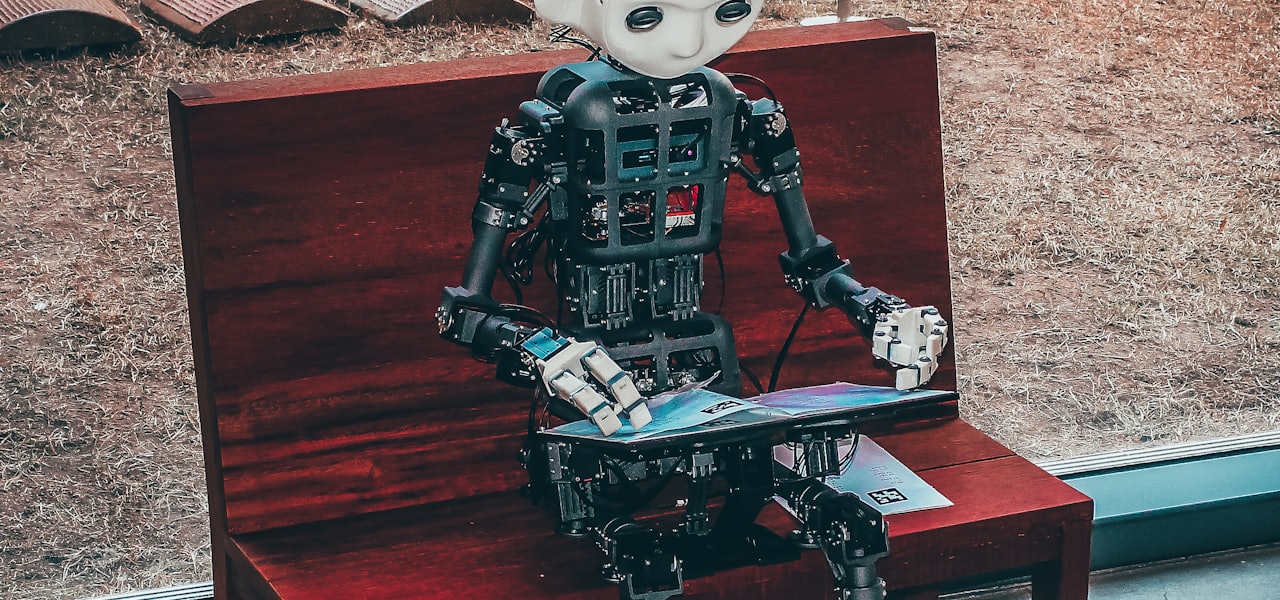
Chaotic cryptology is the application of mathematical chaos theory to the practice of cryptography, the study or techniques used to privately and securely transmit information with the presence of a third-party or adversary. Since first being investigated by Robert Matthews in 1989, the use of chaos in cryptography has attracted much interest. However, long-standing concerns about its security and implementation speed continue to limit its implementation. Chaotic cryptology consists of two opposite processes: Chaotic cryptography and Chaotic cryptanalysis. Cryptography refers to encrypting information for secure transmission, whereas cryptanalysis refers to decrypting and deciphering encoded encrypted messages. In order to use chaos theory efficiently in cryptography, the chaotic maps are implemented such that the entropy generated by the map can produce required Confusion and diffusion. Properties in chaotic systems and cryptographic primitives share unique characteristics that allow for the chaotic systems to be applied to cryptography. If chaotic parameters, as well as cryptographic keys, can be mapped symmetrically or mapped to produce acceptable and functional outputs, it will make it next to impossible for an adversary to find the outputs without any knowledge of the initial values. Since chaotic maps in a real life scenario require a set of numbers that are limited, they may, in fact, have no real purpose in a cryptosystem if the chaotic behavior can be predicted. One of the most important issues for any cryptographic primitive is the security of the system. However, in numerous cases, chaos-based cryptography algorithms are proved insecure. The main issue in many of the cryptanalyzed algorithms is the inadequacy of the chaotic maps implemented in the system. == Types == Chaos-based cryptography has been divided into two major groups: Symmetric chaos cryptography, where the same secret key is used by sender and receiver. Asymmetric chaos cryptography, where one key of the cryptosystem is public. Some of the few proposed systems have been broken. The majority of chaos-based cryptographic algorithms are symmetric. Many use discrete chaotic maps in their process. == Applications == === Image encryption === Bourbakis and Alexopoulos in 1991 proposed supposedly the earliest fully intended digital image encryption scheme which was based on SCAN language. Later on, with the emergence of chaos-based cryptography hundreds of new image encryption algorithms, all with the aim of improving the security of digital images were proposed. However, there were three main aspects of the design of an image encryption that was usually modified in different algorithms (chaotic map, application of the map and structure of algorithm). The initial and perhaps most crucial point was the chaotic map applied in the design of the algorithms. The speed of the cryptosystem is always an important parameter in the evaluation of the efficiency of a cryptography algorithm, therefore, the designers were initially interested in using simple chaotic maps such as tent map, and the logistic map. However, in 2006 and 2007, the new image encryption algorithms based on more sophisticated chaotic maps proved that application of chaotic map with higher dimension could improve the quality and security of the cryptosystems. === Hash function === Chaotic behavior can generate hash functions, such as applying the Chirikov/Julia 3D trajectory translation into a SHA-512 hash. === Random number generation === The unpredictable behavior of the chaotic maps can be used in the generation of random numbers. Some of the earliest chaos-based random number generators tried to directly generate random numbers from the logistic map. Many more recent works did so using the numerical solutions of hyperchaotic systems of differential equations, either at the integer-order, or the fractional-order.
Computer security compromised by hardware failure
Computer security compromised by hardware failure is a branch of computer security applied to hardware. The objective of computer security includes protection of information and property from theft, corruption, or natural disaster, while allowing the information and property to remain accessible and productive to its intended users. Such secret information could be retrieved by different ways. This article focus on the retrieval of data thanks to misused hardware or hardware failure. Hardware could be misused or exploited to get secret data. This article collects main types of attack that can lead to data theft. Computer security can be compromised by devices, such as keyboards, monitors or printers (thanks to electromagnetic or acoustic emanation for example) or by components of the computer, such as the memory, the network card or the processor (thanks to time or temperature analysis for example). == Devices == === Monitor === The monitor is the main device used to access data on a computer. It has been shown that monitors radiate or reflect data on their environment, potentially giving attackers access to information displayed on the monitor. ==== Electromagnetic emanations ==== Video display units radiate: narrowband harmonics of the digital clock signals; broadband harmonics of the various 'random' digital signals such as the video signal. Known as compromising emanations or TEMPEST radiation, a code word for a U.S. government programme aimed at attacking the problem, the electromagnetic broadcast of data has been a significant concern in sensitive computer applications. Eavesdroppers can reconstruct video screen content from radio frequency emanations. Each (radiated) harmonic of the video signal shows a remarkable resemblance to a broadcast TV signal. It is therefore possible to reconstruct the picture displayed on the video display unit from the radiated emission by means of a normal television receiver. If no preventive measures are taken, eavesdropping on a video display unit is possible at distances up to several hundreds of meters, using only a normal black-and-white TV receiver, a directional antenna and an antenna amplifier. It is even possible to pick up information from some types of video display units at a distance of over 1 kilometer. If more sophisticated receiving and decoding equipment is used, the maximum distance can be much greater. ==== Compromising reflections ==== What is displayed by the monitor is reflected on the environment. The time-varying diffuse reflections of the light emitted by a CRT monitor can be exploited to recover the original monitor image. This is an eavesdropping technique for spying at a distance on data that is displayed on an arbitrary computer screen, including the currently prevalent LCD monitors. The technique exploits reflections of the screen's optical emanations in various objects that one commonly finds close to the screen and uses those reflections to recover the original screen content. Such objects include eyeglasses, tea pots, spoons, plastic bottles, and even the eye of the user. This attack can be successfully mounted to spy on even small fonts using inexpensive, off-the-shelf equipment (less than 1500 dollars) from a distance of up to 10 meters. Relying on more expensive equipment allowed to conduct this attack from over 30 meters away, demonstrating that similar attacks are feasible from the other side of the street or from a close by building. Many objects that may be found at a usual workplace can be exploited to retrieve information on a computer's display by an outsider. Particularly good results were obtained from reflections in a user's eyeglasses or a tea pot located on the desk next to the screen. Reflections that stem from the eye of the user also provide good results. However, eyes are harder to spy on at a distance because they are fast-moving objects and require high exposure times. Using more expensive equipment with lower exposure times helps to remedy this problem. The reflections gathered from curved surfaces on close by objects indeed pose a substantial threat to the confidentiality of data displayed on the screen. Fully invalidating this threat without at the same time hiding the screen from the legitimate user seems difficult, without using curtains on the windows or similar forms of strong optical shielding. Most users, however, will not be aware of this risk and may not be willing to close the curtains on a nice day. The reflection of an object, a computer display, in a curved mirror creates a virtual image that is located behind the reflecting surface. For a flat mirror this virtual image has the same size and is located behind the mirror at the same distance as the original object. For curved mirrors, however, the situation is more complex. === Keyboard === ==== Electromagnetic emanations ==== Computer keyboards are often used to transmit confidential data such as passwords. Since they contain electronic components, keyboards emit electromagnetic waves. These emanations could reveal sensitive information such as keystrokes. Electromagnetic emanations have turned out to constitute a security threat to computer equipment. The figure below presents how a keystroke is retrieved and what material is necessary. The approach is to acquire the raw signal directly from the antenna and to process the entire captured electromagnetic spectrum. Thanks to this method, four different kinds of compromising electromagnetic emanations have been detected, generated by wired and wireless keyboards. These emissions lead to a full or a partial recovery of the keystrokes. The best practical attack fully recovered 95% of the keystrokes of a PS/2 keyboard at a distance up to 20 meters, even through walls. Because each keyboard has a specific fingerprint based on the clock frequency inconsistencies, it can determine the source keyboard of a compromising emanation, even if multiple keyboards from the same model are used at the same time. The four different kinds way of compromising electromagnetic emanations are described below. ===== The Falling Edge Transition Technique ===== When a key is pressed, released or held down, the keyboard sends a packet of information known as a scan code to the computer. The protocol used to transmit these scan codes is a bidirectional serial communication, based on four wires: Vcc (5 volts), ground, data and clock. Clock and data signals are identically generated. Hence, the compromising emanation detected is the combination of both signals. However, the edges of the data and the clock lines are not superposed. Thus, they can be easily separated to obtain independent signals. ===== The Generalized Transition Technique ===== The Falling Edge Transition attack is limited to a partial recovery of the keystrokes. This is a significant limitation. The GTT is a falling edge transition attack improved, which recover almost all keystrokes. Indeed, between two traces, there is exactly one data rising edge. If attackers are able to detect this transition, they can fully recover the keystrokes. ===== The Modulation Technique ===== Harmonics compromising electromagnetic emissions come from unintentional emanations such as radiations emitted by the clock, non-linear elements, crosstalk, ground pollution, etc. Determining theoretically the reasons of these compromising radiations is a very complex task. These harmonics correspond to a carrier of approximately 4 MHz which is very likely the internal clock of the micro-controller inside the keyboard. These harmonics are correlated with both clock and data signals, which describe modulated signals (in amplitude and frequency) and the full state of both clock and data signals. This means that the scan code can be completely recovered from these harmonics. ===== The Matrix Scan Technique ===== Keyboard manufacturers arrange the keys in a matrix. The keyboard controller, often an 8-bit processor, parses columns one-by-one and recovers the state of 8 keys at once. This matrix scan process can be described as 192 keys (some keys may not be used, for instance modern keyboards use 104/105 keys) arranged in 24 columns and 8 rows. These columns are continuously pulsed one-by-one for at least 3μs. Thus, these leads may act as an antenna and generate electromagnetic emanations. If an attacker is able to capture these emanations, he can easily recover the column of the pressed key. Even if this signal does not fully describe the pressed key, it still gives partial information on the transmitted scan code, i.e. the column number. Note that the matrix scan routine loops continuously. When no key is pressed, we still have a signal composed of multiple equidistant peaks. These emanations may be used to remotely detect the presence of powered computers. Concerning wireless keyboards, the wireless data burst transmission can be used as an electromagnetic trigger to detect exactly when a key is pressed, while the matrix s
Mark V. Shaney
Mark V. Shaney is a synthetic Usenet user whose postings in the net.singles newsgroups were generated by Markov chain techniques, based on text from other postings. The username is a play on the words "Markov chain". Many readers were fooled into thinking that the quirky, sometimes uncannily topical posts were written by a real person. The system was designed by Rob Pike with coding by Bruce Ellis. Don P. Mitchell wrote the Markov chain code, initially demonstrating it to Pike and Ellis using the Tao Te Ching as a basis. They chose to apply it to the net.singles netnews group. The program is fairly simple. It ingests the sample text (the Tao Te Ching, or the posts of a Usenet group) and creates a massive list of every sequence of three successive words (triplet) which occurs in the text. It then chooses two words at random, and looks for a word which follows those two in one of the triplets in its massive list. If there is more than one, it picks at random (identical triplets count separately, so a sequence which occurs twice is twice as likely to be picked as one which only occurs once). It then adds that word to the generated text. Then, in the same way, it picks a triplet that starts with the second and third words in the generated text, and that gives a fourth word. It adds the fourth word, then repeats with the third and fourth words, and so on. This algorithm is called a third-order Markov chain (because it uses sequences of three words). == Examples == A classic example, from 1984, originally sent as a mail message, later posted to net.singles is reproduced here: >From mvs Fri Nov 16 17:11 EST 1984 remote from alice It looks like Reagan is going to say? Ummm... Oh yes, I was looking for. I'm so glad I remembered it. Yeah, what I have wondered if I had committed a crime. Don't eat with your assessment of Reagon and Mondale. Up your nose with a guy from a firm that specifically researches the teen-age market. As a friend of mine would say, "It really doesn't matter"... It looks like Reagan is holding back the arms of the American eating public have changed dramatically, and it got pretty boring after about 300 games. People, having a much larger number of varieties, and are very different from what one can find in Chinatowns across the country (things like pork buns, steamed dumplings, etc.) They can be cheap, being sold for around 30 to 75 cents apiece (depending on size), are generally not greasy, can be adequately explained by stupidity. Singles have felt insecure since we came down from the Conservative world at large. But Chuqui is the way it happened and the prices are VERY reasonable. Can anyone think of myself as a third sex. Yes, I am expected to have. People often get used to me knowing these things and then a cover is placed over all of them. Along the side of the $$ are spent by (or at least for ) the girls. You can't settle the issue. It seems I've forgotten what it is, but I don't. I know about violence against women, and I really doubt they will ever join together into a large number of jokes. It showed Adam, just after being created. He has a modem and an autodial routine. He calls my number 1440 times a day. So I will conclude by saying that I can well understand that she might soon have the time, it makes sense, again, to get the gist of my argument, I was in that (though it's a Republican administration). _-_-_-_-Mark Other quotations from Mark's Usenet posts are: "I spent an interesting evening recently with a grain of salt." (Alternatively reported as "While at a conference a few weeks back, I spent an interesting evening with a grain of salt.") "I hope that there are sour apples in every bushel." (see also sour grapes) == History == In The Usenet Handbook Mark Harrison writes that after September 1981, students joined Usenet en masse, "creating the USENET we know today: endless dumb questions, endless idiots posing as savants, and (of course) endless victims for practical jokes." In December, Rob Pike created the netnews group net.suicide as prank, "a forum for bad jokes". Some users thought it was a legitimate forum, some discussed "riding motorcycles without helmets". At first, most posters were "real people", but soon "characters" began posting. Pike created a "vicious" character named Bimmler. At its peak, net.suicide had ten frequent posters; nine were "known to be characters." But ultimately, Pike deleted the newsgroup because it was too much work to maintain; Bimmler messages were created "by hand". The "obvious alternative" was software, running on a Bell Labs computer created by Bruce Ellis, based on the Markov code by Don Mitchell, which became the online character Mark V. Shaney. Kernighan and Pike listed Mark V. Shaney in the acknowledgements in The Practice of Programming, noting its roots in Mitchell's markov, which, adapted as shaney, was used for "humorous deconstructionist activities" in the 1980s. Dewdney pointed out "perhaps Mark V. Shaney's magnum opus: a 20-page commentary on the deconstructionist philosophy of Jean Baudrillard" directed by Pike, with assistance from Henry S. Baird and Catherine Richards, to be distributed by email. The piece was based on Jean Baudrillard's "The Precession of Simulacra", published in Simulacra and Simulation (1981). == Reception == The program was discussed by A. K. Dewdney in the Scientific American "Computer Recreations" column in 1989, by Penn Jillette in his PC Computing column in 1991, and in several books, including the Usenet Handbook, Bots: the Origin of New Species, Hippo Eats Dwarf: A Field Guide to Hoaxes and Other B.S., and non-computer-related journals such as Texas Studies in Literature and Language. Dewdney wrote about the program's output, "The overall impression is not unlike what remains in the brain of an inattentive student after a late-night study session. Indeed, after reading the output of Mark V. Shaney, I find ordinary writing almost equally strange and incomprehensible!" He noted the reactions of newsgroup users, who have "shuddered at Mark V. Shaney's reflections, some with rage and others with laughter:" The opinions of the new net.singles correspondent drew mixed reviews. Serious users of the bulletin board's services sensed satire. Outraged, they urged that someone "pull the plug" on Mark V. Shaney's monstrous rantings. Others inquired almost admiringly whether the program was a secret artificial intelligence project that was being tested in a human conversational environment. A few may even have thought that Mark V. Shaney was a real person, a tortured schizophrenic desperately seeking a like-minded companion. Concluding, Dewdney wrote, "If the purpose of computer prose is to fool people into thinking that it was written by a sane person, Mark V. Shaney probably falls short." A 2012 article in Observer compared Mark V. Shaney's "strangely beautiful" postings to the Horse_ebooks account on Twitter and music reviews at Pitchfork, saying that "this mash-up of gibberish and human sentiment" is what "made Mark V. Shaney so endlessly fascinating".
Night Sky (app)
Night Sky (app) is an application developed and published by indie studio iCandi Apps Ltd. from the UK. Night Sky is a stargazing reference app, where the user can explore a virtual representation of the night sky to identify stars, planets, constellations and satellites. The app is developed specifically for iOS, tvOS and watchOS devices. Night Sky was first released on November 1, 2011 for iOS, and has had multiple updates since launch. Night Sky was mentioned in the September 2016 Apple Keynote during the Apple Watch Series 2 announcement. In October 2016, Night Sky was featured as the Free App of The Week on the Apple App Store. == Reception == Night Sky was featured in Apple's 'Best of 2012' and has also been pre-installed onto iPads in Apple retail stores worldwide.
Image moment
In image processing, computer vision and related fields, an image moment is a certain particular weighted average (moment) of the image pixels' intensities, or a function of such moments, usually chosen to have some attractive property or interpretation. Image moments are useful to describe objects after segmentation. Simple properties of the image which are found via image moments include area (or total intensity), its centroid, and information about its orientation. == Raw moments == For a 2D continuous function f(x,y) the moment (sometimes called "raw moment") of order (p + q) is defined as M p q = ∫ − ∞ ∞ ∫ − ∞ ∞ x p y q f ( x , y ) d x d y {\displaystyle M_{pq}=\int \limits _{-\infty }^{\infty }\int \limits _{-\infty }^{\infty }x^{p}y^{q}f(x,y)\,dx\,dy} for p,q = 0,1,2,... Adapting this to scalar (grayscale) image with pixel intensities I(x,y), raw image moments Mij are calculated by M i j = ∑ x ∑ y x i y j I ( x , y ) {\displaystyle M_{ij}=\sum _{x}\sum _{y}x^{i}y^{j}I(x,y)\,\!} In some cases, this may be calculated by considering the image as a probability density function, i.e., by dividing the above by ∑ x ∑ y I ( x , y ) {\displaystyle \sum _{x}\sum _{y}I(x,y)\,\!} A uniqueness theorem states that if f(x,y) is piecewise continuous and has nonzero values only in a finite part of the xy plane, moments of all orders exist, and the moment sequence (Mpq) is uniquely determined by f(x,y). Conversely, (Mpq) uniquely determines f(x,y). In practice, the image is summarized with functions of a few lower order moments. === Examples === Simple image properties derived via raw moments include: Area (for binary images) or sum of grey level (for greytone images): M 00 {\displaystyle M_{00}} Centroid: { x ¯ , y ¯ } = { M 10 M 00 , M 01 M 00 } {\displaystyle \{{\bar {x}},\ {\bar {y}}\}=\left\{{\frac {M_{10}}{M_{00}}},{\frac {M_{01}}{M_{00}}}\right\}} == Central moments == Central moments are defined as μ p q = ∫ − ∞ ∞ ∫ − ∞ ∞ ( x − x ¯ ) p ( y − y ¯ ) q f ( x , y ) d x d y {\displaystyle \mu _{pq}=\int \limits _{-\infty }^{\infty }\int \limits _{-\infty }^{\infty }(x-{\bar {x}})^{p}(y-{\bar {y}})^{q}f(x,y)\,dx\,dy} where x ¯ = M 10 M 00 {\displaystyle {\bar {x}}={\frac {M_{10}}{M_{00}}}} and y ¯ = M 01 M 00 {\displaystyle {\bar {y}}={\frac {M_{01}}{M_{00}}}} are the components of the centroid. If ƒ(x, y) is a digital image, then the previous equation becomes μ p q = ∑ x ∑ y ( x − x ¯ ) p ( y − y ¯ ) q f ( x , y ) {\displaystyle \mu _{pq}=\sum _{x}\sum _{y}(x-{\bar {x}})^{p}(y-{\bar {y}})^{q}f(x,y)} The central moments of order up to 3 are: μ 00 = M 00 , μ 01 = 0 , μ 10 = 0 , μ 11 = M 11 − x ¯ M 01 = M 11 − y ¯ M 10 , μ 20 = M 20 − x ¯ M 10 , μ 02 = M 02 − y ¯ M 01 , μ 21 = M 21 − 2 x ¯ M 11 − y ¯ M 20 + 2 x ¯ 2 M 01 , μ 12 = M 12 − 2 y ¯ M 11 − x ¯ M 02 + 2 y ¯ 2 M 10 , μ 30 = M 30 − 3 x ¯ M 20 + 2 x ¯ 2 M 10 , μ 03 = M 03 − 3 y ¯ M 02 + 2 y ¯ 2 M 01 . {\displaystyle {\begin{aligned}\mu _{00}&=M_{00},&\mu _{01}&=0,\\\mu _{10}&=0,&\mu _{11}&=M_{11}-{\bar {x}}M_{01}=M_{11}-{\bar {y}}M_{10},\\\mu _{20}&=M_{20}-{\bar {x}}M_{10},&\mu _{02}&=M_{02}-{\bar {y}}M_{01},\\\mu _{21}&=M_{21}-2{\bar {x}}M_{11}-{\bar {y}}M_{20}+2{\bar {x}}^{2}M_{01},&\mu _{12}&=M_{12}-2{\bar {y}}M_{11}-{\bar {x}}M_{02}+2{\bar {y}}^{2}M_{10},\\\mu _{30}&=M_{30}-3{\bar {x}}M_{20}+2{\bar {x}}^{2}M_{10},&\mu _{03}&=M_{03}-3{\bar {y}}M_{02}+2{\bar {y}}^{2}M_{01}.\end{aligned}}} It can be shown that: μ p q = ∑ m p ∑ n q ( p m ) ( q n ) ( − x ¯ ) ( p − m ) ( − y ¯ ) ( q − n ) M m n {\displaystyle \mu _{pq}=\sum _{m}^{p}\sum _{n}^{q}{p \choose m}{q \choose n}(-{\bar {x}})^{(p-m)}(-{\bar {y}})^{(q-n)}M_{mn}} Central moments are translational invariant. === Examples === Information about image orientation can be derived by first using the second order central moments to construct a covariance matrix. μ 20 ′ = μ 20 / μ 00 = M 20 / M 00 − x ¯ 2 μ 02 ′ = μ 02 / μ 00 = M 02 / M 00 − y ¯ 2 μ 11 ′ = μ 11 / μ 00 = M 11 / M 00 − x ¯ y ¯ {\displaystyle {\begin{aligned}\mu '_{20}&=\mu _{20}/\mu _{00}=M_{20}/M_{00}-{\bar {x}}^{2}\\\mu '_{02}&=\mu _{02}/\mu _{00}=M_{02}/M_{00}-{\bar {y}}^{2}\\\mu '_{11}&=\mu _{11}/\mu _{00}=M_{11}/M_{00}-{\bar {x}}{\bar {y}}\end{aligned}}} The covariance matrix of the image I ( x , y ) {\displaystyle I(x,y)} is now cov [ I ( x , y ) ] = [ μ 20 ′ μ 11 ′ μ 11 ′ μ 02 ′ ] . {\displaystyle \operatorname {cov} [I(x,y)]={\begin{bmatrix}\mu '_{20}&\mu '_{11}\\\mu '_{11}&\mu '_{02}\end{bmatrix}}.} The eigenvectors of this matrix correspond to the major and minor axes of the image intensity, so the orientation can thus be extracted from the angle of the eigenvector associated with the largest eigenvalue towards the axis closest to this eigenvector. It can be shown that this angle Θ is given by the following formula: Θ = 1 2 arctan ( 2 μ 11 ′ μ 20 ′ − μ 02 ′ ) {\displaystyle \Theta ={\frac {1}{2}}\arctan \left({\frac {2\mu '_{11}}{\mu '_{20}-\mu '_{02}}}\right)} The above formula holds as long as: μ 20 ′ − μ 02 ′ ≠ 0 {\displaystyle \mu '_{20}-\mu '_{02}\neq 0} The eigenvalues of the covariance matrix can easily be shown to be λ i = μ 20 ′ + μ 02 ′ 2 ± 4 μ ′ 11 2 + ( μ ′ 20 − μ ′ 02 ) 2 2 , {\displaystyle \lambda _{i}={\frac {\mu '_{20}+\mu '_{02}}{2}}\pm {\frac {\sqrt {4{\mu '}_{11}^{2}+({\mu '}_{20}-{\mu '}_{02})^{2}}}{2}},} and are proportional to the squared length of the eigenvector axes. The relative difference in magnitude of the eigenvalues are thus an indication of the eccentricity of the image, or how elongated it is. The eccentricity is 1 − λ 2 λ 1 . {\displaystyle {\sqrt {1-{\frac {\lambda _{2}}{\lambda _{1}}}}}.} == Moment invariants == Moments are well-known for their application in image analysis, since they can be used to derive invariants with respect to specific transformation classes. The term invariant moments is often abused in this context. However, while moment invariants are invariants that are formed from moments, the only moments that are invariants themselves are the central moments. Note that the invariants detailed below are exactly invariant only in the continuous domain. In a discrete domain, neither scaling nor rotation are well defined: a discrete image transformed in such a way is generally an approximation, and the transformation is not reversible. These invariants therefore are only approximately invariant when describing a shape in a discrete image. === Translation invariants === The central moments μi j of any order are, by construction, invariant with respect to translations. === Scale invariants === Invariants ηi j with respect to both translation and scale can be constructed from central moments by dividing through a properly scaled zero-th central moment: η i j = μ i j μ 00 ( 1 + i + j 2 ) {\displaystyle \eta _{ij}={\frac {\mu _{ij}}{\mu _{00}^{\left(1+{\frac {i+j}{2}}\right)}}}\,\!} where i + j ≥ 2. Note that translational invariance directly follows by only using central moments. === Rotation invariants === As shown in the work of Hu, invariants with respect to translation, scale, and rotation can be constructed: I 1 = η 20 + η 02 {\displaystyle I_{1}=\eta _{20}+\eta _{02}} I 2 = ( η 20 − η 02 ) 2 + 4 η 11 2 {\displaystyle I_{2}=(\eta _{20}-\eta _{02})^{2}+4\eta _{11}^{2}} I 3 = ( η 30 − 3 η 12 ) 2 + ( 3 η 21 − η 03 ) 2 {\displaystyle I_{3}=(\eta _{30}-3\eta _{12})^{2}+(3\eta _{21}-\eta _{03})^{2}} I 4 = ( η 30 + η 12 ) 2 + ( η 21 + η 03 ) 2 {\displaystyle I_{4}=(\eta _{30}+\eta _{12})^{2}+(\eta _{21}+\eta _{03})^{2}} I 5 = ( η 30 − 3 η 12 ) ( η 30 + η 12 ) [ ( η 30 + η 12 ) 2 − 3 ( η 21 + η 03 ) 2 ] + ( 3 η 21 − η 03 ) ( η 21 + η 03 ) [ 3 ( η 30 + η 12 ) 2 − ( η 21 + η 03 ) 2 ] {\displaystyle I_{5}=(\eta _{30}-3\eta _{12})(\eta _{30}+\eta _{12})[(\eta _{30}+\eta _{12})^{2}-3(\eta _{21}+\eta _{03})^{2}]+(3\eta _{21}-\eta _{03})(\eta _{21}+\eta _{03})[3(\eta _{30}+\eta _{12})^{2}-(\eta _{21}+\eta _{03})^{2}]} I 6 = ( η 20 − η 02 ) [ ( η 30 + η 12 ) 2 − ( η 21 + η 03 ) 2 ] + 4 η 11 ( η 30 + η 12 ) ( η 21 + η 03 ) {\displaystyle I_{6}=(\eta _{20}-\eta _{02})[(\eta _{30}+\eta _{12})^{2}-(\eta _{21}+\eta _{03})^{2}]+4\eta _{11}(\eta _{30}+\eta _{12})(\eta _{21}+\eta _{03})} I 7 = ( 3 η 21 − η 03 ) ( η 30 + η 12 ) [ ( η 30 + η 12 ) 2 − 3 ( η 21 + η 03 ) 2 ] − ( η 30 − 3 η 12 ) ( η 21 + η 03 ) [ 3 ( η 30 + η 12 ) 2 − ( η 21 + η 03 ) 2 ] . {\displaystyle I_{7}=(3\eta _{21}-\eta _{03})(\eta _{30}+\eta _{12})[(\eta _{30}+\eta _{12})^{2}-3(\eta _{21}+\eta _{03})^{2}]-(\eta _{30}-3\eta _{12})(\eta _{21}+\eta _{03})[3(\eta _{30}+\eta _{12})^{2}-(\eta _{21}+\eta _{03})^{2}].} These are well-known as Hu moment invariants. The first one, I1, is analogous to the moment of inertia around the image's centroid, where the pixels' intensities are analogous to physical density. The first six, I1 ... I6, are reflection symmetric, i.e. they are unchanged if the image is changed to a mirror image. The last one, I7, is reflection antisymmetric (changes sign under reflection), which enables it to distinguish mirror images of otherwise identical im
Database
In computing, a database is an organized collection of data or a type of data store based on the use of a database management system (DBMS), the software that interacts with end users, applications, and the database itself to capture and analyze the data. The DBMS additionally encompasses the core facilities provided to administer the database. The sum total of the database, the DBMS and the associated applications can be referred to as a database system. Often the term "database" is also used loosely to refer to any of the DBMS, the database system or an application associated with the database. Before digital storage and retrieval of data became widespread, index cards were used for data storage in a wide range of applications and environments: in the home to record and store recipes, shopping lists, contact information and other organizational data; in business to record presentation notes, project research and notes, and contact information; in schools as flash cards or other visual aids; and in academic research to hold data such as bibliographical citations or notes in a card file. Professional book indexers used index cards in the creation of book indexes until they were replaced by indexing software in the 1980s and 1990s. Small databases can be stored on a file system, while large databases are hosted on computer clusters or cloud storage. The design of databases spans formal techniques and practical considerations, including data modeling, efficient data representation and storage, query languages, security and privacy of sensitive data, and distributed computing issues, including supporting concurrent access and fault tolerance. Computer scientists may classify database management systems according to the database models that they support. Relational databases became dominant in the 1980s. These model data as rows and columns in a series of tables, and the vast majority use SQL for writing and querying data. In the 2000s, non-relational databases became popular, collectively referred to as NoSQL, because they use different query languages. == Terminology and overview == Formally, a "database" refers to a set of related data accessed through the use of a "database management system" (DBMS), which is an integrated set of computer software that allows users to interact with one or more databases and provides access to all of the data contained in the database (although restrictions may exist that limit access to particular data). The DBMS provides various functions that allow entry, storage and retrieval of large quantities of information and provides ways to manage how that information is organized. Because of the close relationship between them, the term "database" is often used casually to refer to both a database and the DBMS used to manipulate it. Outside the world of professional information technology, the term database is often used to refer to any collection of related data (such as a spreadsheet or a card index) as size and usage requirements typically necessitate use of a database management system. Existing DBMSs provide various functions that allow management of a database and its data which can be classified into four main functional groups: Data definition – Creation, modification and removal of definitions that detail how the data is to be organized. Update – Insertion, modification, and deletion of the data itself. Retrieval – Selecting data according to specified criteria (e.g., a query, a position in a hierarchy, or a position in relation to other data) and providing that data either directly to the user, or making it available for further processing by the database itself or by other applications. The retrieved data may be made available in a more or less direct form without modification, as it is stored in the database, or in a new form obtained by altering it or combining it with existing data from the database. Administration – Registering and monitoring users, enforcing data security, monitoring performance, maintaining data integrity, dealing with concurrency control, and recovering information that has been corrupted by some event such as an unexpected system failure. Both a database and its DBMS conform to the principles of a particular database model. "Database system" refers collectively to the database model, database management system, and database. Physically, database servers are dedicated computers that hold the actual databases and run only the DBMS and related software. Database servers are usually multiprocessor computers, with generous memory and RAID disk arrays used for stable storage. Hardware database accelerators, connected to one or more servers via a high-speed channel, are also used in large-volume transaction processing environments. DBMSs are found at the heart of most database applications. DBMSs may be built around a custom multitasking kernel with built-in networking support, but modern DBMSs typically rely on a standard operating system to provide these functions. Since DBMSs comprise a significant market, computer and storage vendors often take into account DBMS requirements in their own development plans. Databases and DBMSs can be categorized according to the database model(s) that they support (such as relational or XML), the type(s) of computer they run on (from a server cluster to a mobile phone), the query language(s) used to access the database (such as SQL or XQuery), and their internal engineering, which affects performance, scalability, resilience, and security. == History == The sizes, capabilities, and performance of databases and their respective DBMSs have grown in orders of magnitude. These performance increases were enabled by the technology progress in the areas of processors, computer memory, computer storage, and computer networks. The concept of a database was made possible by the emergence of direct access storage media such as magnetic disks, which became widely available in the mid-1960s; earlier systems relied on sequential storage of data on magnetic tape. The subsequent development of database technology can be divided into three eras based on data model or structure: navigational, SQL/relational, and post-relational. The two main early navigational data models were the hierarchical model and the CODASYL model (network model). These were characterized by the use of pointers (often physical disk addresses) to follow relationships from one record to another. The relational model, first proposed in 1970 by Edgar F. Codd, departed from this tradition by insisting that applications should search for data by content, rather than by following links. The relational model employs sets of ledger-style tables, each used for a different type of entity. Only in the mid-1980s did computing hardware become powerful enough to allow the wide deployment of relational systems (DBMSs plus applications). By the early 1990s, however, relational systems dominated in all large-scale data processing applications, and as of 2018 they remain dominant: IBM Db2, Oracle, MySQL, and Microsoft SQL Server are the most searched DBMS. The dominant database language, standardized SQL for the relational model, has influenced database languages for other data models. Object databases were developed in the 1980s to overcome the inconvenience of object–relational impedance mismatch, which led to the coining of the term "post-relational" and also the development of hybrid object–relational databases. The next generation of post-relational databases in the late 2000s became known as NoSQL databases, introducing fast key–value stores and document-oriented databases. A competing "next generation" known as NewSQL databases attempted new implementations that retained the relational/SQL model while aiming to match the high performance of NoSQL compared to commercially available relational DBMSs. === 1960s, navigational DBMS === The introduction of the term database coincided with the availability of direct-access storage (disks and drums) from the mid-1960s onwards. The term represented a contrast with the tape-based systems of the past, allowing shared interactive use rather than daily batch processing. The Oxford English Dictionary cites a 1962 report by the System Development Corporation of California as the first to use the term "data-base" in a specific technical sense. As computers grew in speed and capability, a number of general-purpose database systems emerged; by the mid-1960s a number of such systems had come into commercial use. Interest in a standard began to grow, and Charles Bachman, author of one such product, the Integrated Data Store (IDS), founded the Database Task Group within CODASYL, the group responsible for the creation and standardization of COBOL. In 1971, the Database Task Group delivered their standard, which generally became known as the CODASYL approach, and soon a number of commercial products based on this approach entered the market. The CODASYL approach of
Intrinsic dimension
In mathematics, the intrinsic dimension of a subset can be thought of as the minimal number of variables needed to represent the subset. The concept has widespread applications in geometry, dynamical systems, signal processing, statistics, and other fields. Due to its widespread applications and vague conceptualization, there are many different ways to define it rigorously. Consequently, the same set might have different intrinsic dimensions according to different definitions. The intrinsic dimension can be used as a lower bound of what dimension it is possible to compress a data set into through dimension reduction, but it can also be used as a measure of the complexity of the data set or signal. For a data set or signal of N variables, its intrinsic dimension M satisfies 0 ≤ M ≤ N, although estimators may yield higher values. == Exact dimension == === Differential === In differential geometry, given a differentiable manifold N and a submanifold M, the intrinsic dimension of M is its dimension. Suppose N has n dimensions and M has m dimensions, then that means around any point in M, there exists a local coordinate system ( x 1 , … , x m , x m + 1 , … , x n ) {\displaystyle (x_{1},\dots ,x_{m},x_{m+1},\dots ,x_{n})} of N, such that the manifold M is simply the subset of N defined by x m + 1 = 0 , … , x n = 0 {\displaystyle x_{m+1}=0,\dots ,x_{n}=0} . === Metric === Given a mere metric space, we can still define its intrinsic dimension. The most general case is the Hausdorff dimension, though for metric spaces occurring in practice, the box-counting dimension and the packing dimension often are identical to the Hausdorff dimension. Let X , d {\textstyle X,d} be a metric space and A ⊂ X {\textstyle A\subset X} be totally bounded. Define the covering number N ( A , ε ) = min { k : A ⊂ ⋃ i = 1 k B ( x i , ε ) } . {\displaystyle N(A,\varepsilon )=\min \left\{k:A\subset \bigcup _{i=1}^{k}B\left(x_{i},\varepsilon \right)\right\}.} The metric entropy is H ( A , ε ) = log N ( A , ε ) {\textstyle H(A,\varepsilon )=\log N(A,\varepsilon )} (any log base). The upper and lower metric entropy dimensions are dim ¯ E A = lim sup ε ↓ 0 H ( A , ε ) log ( 1 / ε ) , dim _ E A = lim inf ε ↓ 0 H ( A , ε ) log ( 1 / ε ) . {\displaystyle {\overline {\dim }}_{E}A=\limsup _{\varepsilon \downarrow 0}{\frac {H(A,\varepsilon )}{\log(1/\varepsilon )}},\quad {\underline {\dim }}_{E}A=\liminf _{\varepsilon \downarrow 0}{\frac {H(A,\varepsilon )}{\log(1/\varepsilon )}}.} If they are equal, then dim E A {\textstyle \operatorname {dim} _{E}A} is that common value, called the metric entropy dimension. The entropy dimensions are usually used in information theory, and especially coding theory, since entropy is involved in its definition. === Topological === If X {\displaystyle X} is merely a topological space, then we can still define its intrinsic dimension, using the topological dimension or Lebesgue covering dimension. An open cover of a topological space X is a family of open sets Uα such that their union is the whole space, ∪ α {\displaystyle \cup _{\alpha }} Uα = X. The order or ply of an open cover A {\displaystyle {\mathfrak {A}}} = {Uα} is the smallest number m (if it exists) for which each point of the space belongs to at most m open sets in the cover: in other words Uα1 ∩ ⋅⋅⋅ ∩ Uαm+1 = ∅ {\displaystyle \emptyset } for α1, ..., αm+1 distinct. A refinement of an open cover A {\displaystyle {\mathfrak {A}}} = {Uα} is another open cover B {\displaystyle {\mathfrak {B}}} = {Vβ}, such that each Vβ is contained in some Uα. The covering dimension of a topological space X is defined to be the minimum value of n such that every finite open cover A {\displaystyle {\mathfrak {A}}} of X has an open refinement B {\displaystyle {\mathfrak {B}}} with order n + 1. The refinement B {\displaystyle {\mathfrak {B}}} can always be chosen to be finite. Thus, if n is finite, Vβ1 ∩ ⋅⋅⋅ ∩ Vβn+2 = ∅ {\displaystyle \emptyset } for β1, ..., βn+2 distinct. If no such minimal n exists, the space is said to have infinite covering dimension. == Introductory example == Let f ( x 1 , x 2 ) {\textstyle f(x_{1},x_{2})} be a two-variable function (or signal) which is of the form f ( x 1 , x 2 ) = g ( x 1 ) {\textstyle f(x_{1},x_{2})=g(x_{1})} for some one-variable function g which is not constant. This means that f varies, in accordance to g, with the first variable or along the first coordinate. On the other hand, f is constant with respect to the second variable or along the second coordinate. It is only necessary to know the value of one, namely the first, variable in order to determine the value of f. Hence, it is a two-variable function but its intrinsic dimension is one. A slightly more complicated example is f ( x 1 , x 2 ) = g ( x 1 + x 2 ) {\textstyle f(x_{1},x_{2})=g(x_{1}+x_{2})} . f is still intrinsic one-dimensional, which can be seen by making a variable transformation y 1 = x 1 + x 2 {\textstyle y_{1}=x_{1}+x_{2}} and y 2 = x 1 − x 2 {\textstyle y_{2}=x_{1}-x_{2}} which gives f ( y 1 + y 2 2 , y 1 − y 2 2 ) = g ( y 1 ) {\textstyle f\left({\frac {y_{1}+y_{2}}{2}},{\frac {y_{1}-y_{2}}{2}}\right)=g\left(y_{1}\right)} . Since the variation in f can be described by the single variable y1 its intrinsic dimension is one. For the case that f is constant, its intrinsic dimension is zero since no variable is needed to describe variation. For the general case, when the intrinsic dimension of the two-variable function f is neither zero or one, it is two. In the literature, functions which are of intrinsic dimension zero, one, or two are sometimes referred to as i0D, i1D or i2D, respectively. == Signal processing == In signal processing of multidimensional signals, the intrinsic dimension of the signal describes how many variables are needed to generate a good approximation of the signal. For an N-variable function f, the set of variables can be represented as an N-dimensional vector x: f = f ( x ) where x = ( x 1 , … , x N ) {\textstyle f=f\left(\mathbf {x} \right){\text{ where }}\mathbf {x} =\left(x_{1},\dots ,x_{N}\right)} . If for some M-variable function g and M × N matrix A it is the case that for all x; f ( x ) = g ( A x ) , {\textstyle f(\mathbf {x} )=g(\mathbf {Ax} ),} M is the smallest number for which the above relation between f and g can be found, then the intrinsic dimension of f is M. The intrinsic dimension is a characterization of f, it is not an unambiguous characterization of g nor of A. That is, if the above relation is satisfied for some f, g, and A, it must also be satisfied for the same f and g′ and A′ given by g ′ ( y ) = g ( B y ) {\textstyle g'\left(\mathbf {y} \right)=g\left(\mathbf {By} \right)} and A ′ = B − 1 A {\textstyle \mathbf {A'} =\mathbf {B} ^{-1}\mathbf {A} } where B is a non-singular M × M matrix, since f ( x ) = g ′ ( A ′ x ) = g ( B A ′ x ) = g ( A x ) {\textstyle f\left(\mathbf {x} \right)=g'\left(\mathbf {A'x} \right)=g\left(\mathbf {BA'x} \right)=g\left(\mathbf {Ax} \right)} . == The Fourier transform of signals of low intrinsic dimension == An N variable function which has intrinsic dimension M < N has a characteristic Fourier transform. Intuitively, since this type of function is constant along one or several dimensions its Fourier transform must appear like an impulse (the Fourier transform of a constant) along the same dimension in the frequency domain. === A simple example === Let f be a two-variable function which is i1D. This means that there exists a normalized vector n ∈ R 2 {\textstyle \mathbf {n} \in \mathbb {R} ^{2}} and a one-variable function g such that f ( x ) = g ( n T x ) {\textstyle f(\mathbf {x} )=g(\mathbf {n} ^{\operatorname {T} }\mathbf {x} )} for all x ∈ R 2 {\textstyle \mathbf {x} \in \mathbb {R} ^{2}} . If F is the Fourier transform of f (both are two-variable functions) it must be the case that F ( u ) = G ( n T u ) ⋅ δ ( m T u ) {\textstyle F\left(\mathbf {u} \right)=G\left(\mathbf {n} ^{\mathrm {T} }\mathbf {u} \right)\cdot \delta \left(\mathbf {m} ^{\mathrm {T} }\mathbf {u} \right)} . Here G is the Fourier transform of g (both are one-variable functions), δ is the Dirac impulse function and m is a normalized vector in R 2 {\textstyle \mathbb {R} ^{2}} perpendicular to n. This means that F vanishes everywhere except on a line which passes through the origin of the frequency domain and is parallel to m. Along this line F varies according to G. === The general case === Let f be an N-variable function which has intrinsic dimension M, that is, there exists an M-variable function g and M × N matrix A such that f ( x ) = g ( A x ) ∀ x {\textstyle f(\mathbf {x} )=g(\mathbf {Ax} )\quad \forall \mathbf {x} } . Its Fourier transform F can then be described as follows: F vanishes everywhere except for a subspace of dimension M The subspace M is spanned by the rows of the matrix A In the subspace, F varies according to G the Fourier transform of g == Generalizations == The type of intrinsic dimension described above assume